Somewhere between the first AI pilot and the first painful cloud bill, every engineering leader gets handed the same question from above: should we own our GPU infrastructure? With it comes a set of decisions most teams have never had to make before. SXM or PCIe. Air or liquid. InfiniBand or Ethernet. Hopper, Blackwell, or wait for Rubin. Each one carries a 7- or 8-figure price tag and a multi-year commitment, and the wrong sequence of answers can quietly double the cost of the entire program.
This guide is the briefing we walk teams through before any of those choices get made. It covers what actually separates a data center GPU from a consumer card, what an AI server and an AI rack are made of, why training and inference have opposite economics, and the decision rules that keep buyers from paying flagship prices for problems a mid-range card solves. By the end, you should be able to interrogate any hardware proposal that lands on your desk.
What is a data center GPU and how is it different from a consumer GPU?
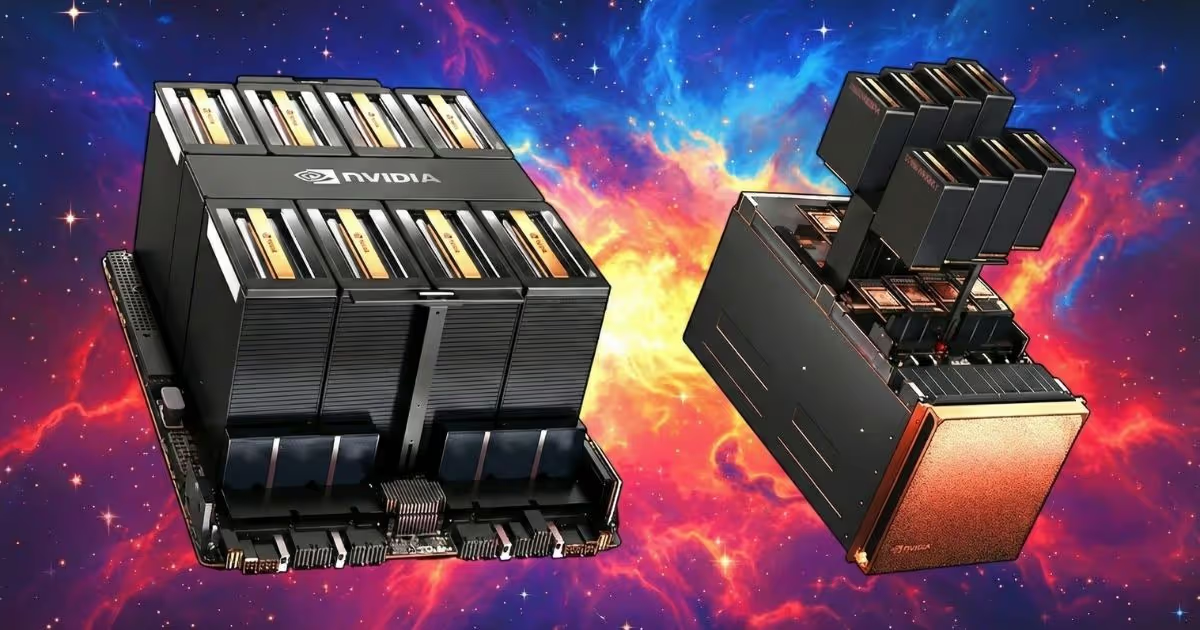
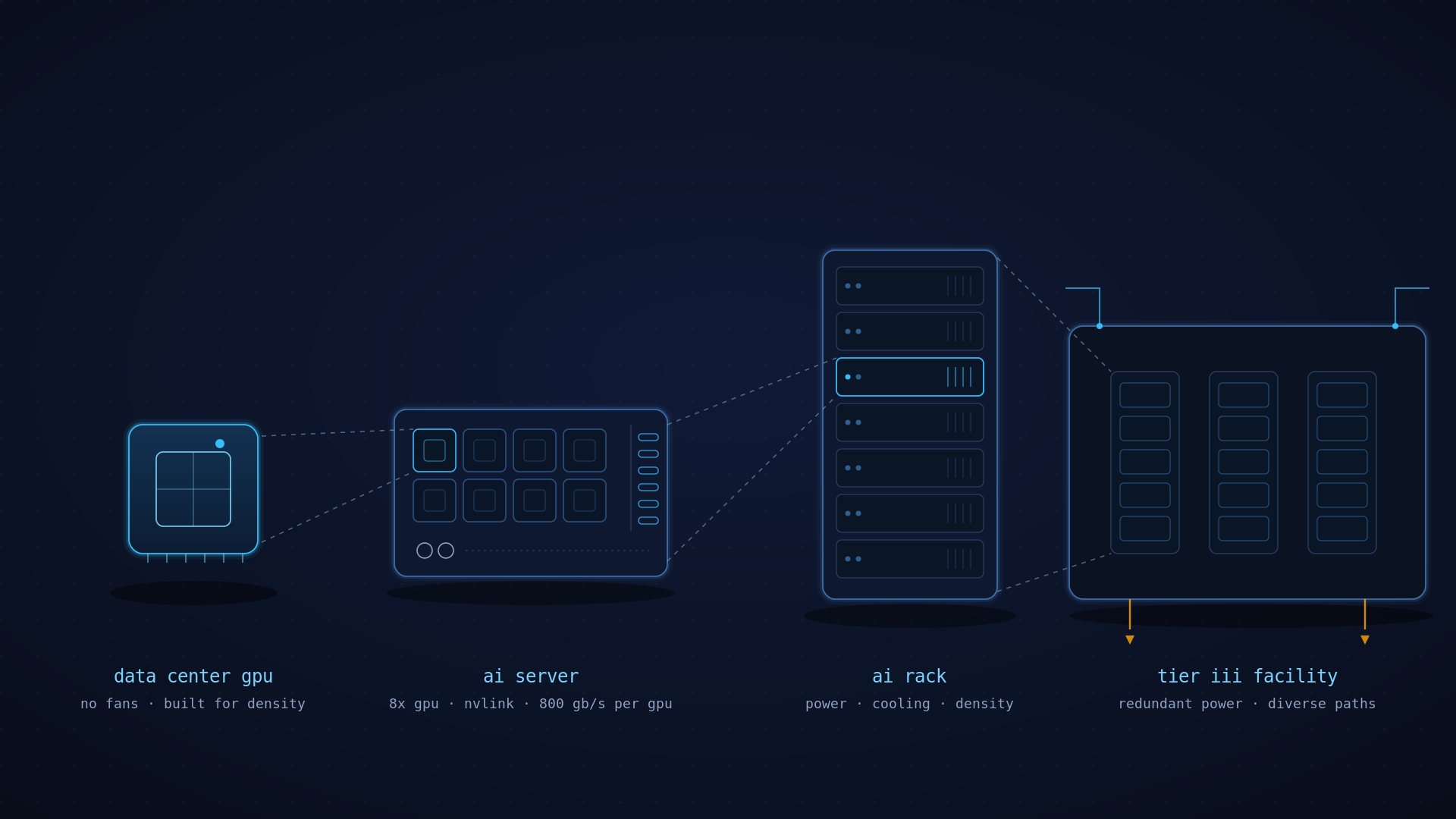
The differences start with cooling, and in a production environment cooling is really an economics question. A consumer card cools itself with onboard fans and can occupy 3 expansion slots. A data center GPU has no fans at all, just heatsink fins, because the server it lives in moves enormous volumes of air through the chassis. That is what allows 8 accelerators to share one chassis, and it is why density, not card price, decides what a rack actually costs per unit of compute.
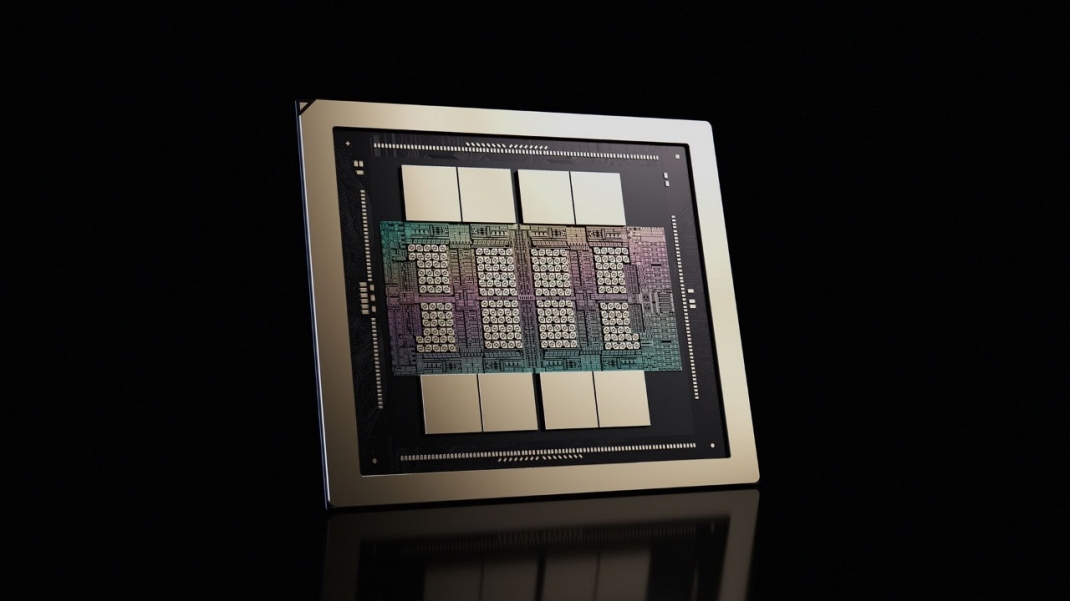
The bigger divide is how GPUs connect to each other. Consumer and workstation cards use PCIe slots. Serious AI servers increasingly use socketed GPU modules (NVIDIA calls its version SXM) mounted 8 to a baseboard and linked by NVLink. Fifth-generation NVLink carries 1.8 TB/s of bidirectional bandwidth per GPU, roughly 14x what PCIe Gen5 can move. When a large model spans 4 or 8 GPUs, they exchange data constantly, and the gap between NVLink inside a baseboard and an ordinary network link between 2 machines is measured in orders of magnitude. This matters for diligence, because low-cost compute offers built on consumer cards, including revived crypto-mining fleets rebranded as distributed AI infrastructure, keep landing on buyers’ desks. The question that exposes them is simple: what happens when the model no longer fits on one card?
Component quality is the quiet differentiator. Server components are qualified under stricter testing regimes than consumer parts, and batches that fail sampling are typically diverted to cheaper consumer products rather than servers. The price difference between an enterprise drive and a retail one is not branding. It is a different tolerance for failure, applied to hardware expected to run flat out for years.
What goes into an AI server and an AI rack?
An AI server is defined less by the GPUs than by everything wrapped around them. A current-generation 8-GPU system pairs its baseboard with a remarkable amount of networking: NVIDIA’s HGX B300 reference design provisions 800 Gb/s of connectivity per GPU through dedicated network interface cards (NICs), and a fully configured node can carry 13 or 14 NICs once storage and front-end networks are counted. Add enterprise storage, redundant power supplies, and fans engineered to cool 8 accelerators at sustained load, and the server itself is only the first layer.
The rack and the facility are the layers buyers forget. These systems assume redundant power feeds, backup generation, and diverse network paths, which in practice means a Tier III data center as the floor, the Uptime Institute certification built around maintaining a facility without shutting workloads down. Hardware this expensive running in a room without those guarantees is a risk decision, not a savings.
What is the difference between training and inference in AI infrastructure?
Training is how a model comes to understand your business, whether that is pre-training from scratch or fine-tuning an open model on your own data. It produces no revenue by itself. Inference is where the investment pays back: the chatbot deflecting support tickets, the copilot accelerating engineers, the model screening transactions. The industry’s center of gravity has already moved. Deloitte projects that inference will account for roughly two-thirds of all AI compute in 2026, up from about one-third in 2023, and Gartner expects 55% of AI-optimized infrastructure spending to support inference this year, rising past 65% by 2029.
The infrastructure consequence is concrete: the expensive east-west RDMA fabric that training demands, connecting every GPU to every GPU, is largely unnecessary for inference. A pure inference cluster can drop that entire network layer from the bill of materials. Teams planning both can buy the fabric once and share it, or run training somewhere power is cheap and rent the capacity out between runs, a model we explored in our look at why enterprises are shifting toward private AI cloud.
The workload picks the hardware, not the other way around
The most expensive sentence in AI procurement is "we need the flagship." Will the top-of-line system run your workload? Absolutely. Will you pay close to double what the problem required? Often, also yes.
The sequence that protects budgets runs backwards from the business problem: define the workload (a support chatbot, a coding assistant, a fraud model), select the model that solves it, then buy the hardware that model actually needs. A fine-tuned model that fits in 96 GB of memory runs comfortably on NVIDIA’s RTX PRO 6000 Blackwell Server Edition, a passively cooled PCIe card with 96 GB of GDDR7, at a fraction of the cost of an 8-GPU baseboard system. The largest frontier models sit at the other extreme: DeepSeek-V3, at 671B parameters, was trained across 2,048 GPUs and needs a multi-GPU NVLink domain just to serve. The workload decides where you land between those poles.
Meta offers the clearest proof that this logic holds at any scale. Its custom MTIA inference chips are slower than NVIDIA’s top GPUs, but Meta reports a 44% reduction in total cost of ownership on the recommendation workloads they were designed for. Meta can do that because its workload is stable and understood. If yours is still evolving, flexible hardware is worth paying for. If it is fixed, cost-efficiency wins.
Hopper vs Blackwell vs Rubin, air vs liquid, InfiniBand vs Ethernet
On GPU generations: Blackwell covers the overwhelming majority of real workloads today, and Hopper remains a rational buy when the workload is precisely known. Rubin deserves respect and patience in equal measure. NVIDIA’s Vera Rubin platform moves racks to an 800-volt direct current power architecture with mandatory liquid cooling, a departure from decades of data center convention that will require new or heavily retrofitted facilities, plus code optimized for a new architecture. For most organizations that is a 2027 conversation, not a reason to delay buying what works now.
On cooling: air still serves most deployments well. Liquid becomes compelling at high density, but relatively few facilities have liquid to the rack today, and many that advertise it complete the buildout only after a signed letter of intent, with months of lead time. Cooling choice is a facility commitment, not a line item.
On fabrics: the direction of travel is unambiguous. Ethernet has caught up to and in many deployments surpassed InfiniBand, the same pattern that ended every proprietary interconnect before it. DeepSeek’s hardware paper notes that InfiniBand switches typically offer 64 ports against 128 on comparable Ethernet switches, at significantly higher cost, and even NVIDIA has leaned in: it joined the Ultra Ethernet Consortium in 2024, and Meta and Oracle announced Spectrum-X Ethernet deployments for their AI data centers in October 2025. InfiniBand retains real latency advantages in narrow cases. For most buyers, Ethernet is simpler to operate and easier to scale.
How much does GPU infrastructure for AI cost?
That number is a budgeting reference, not a quote, and the curve bends at both ends. Small inference deployments built on cost-effective PCIe systems can land at a small fraction of it, while liquid-cooled facilities push the other way. The variable buyers control least is time: component shortages rotate constantly, from GPUs to memory to storage to processors, and what is freely available this quarter may carry 2-quarter lead times the next.
That is the practical argument for involving a system integrator early, while the project is still a workload question rather than a purchase order. Compressing the design phase means orders reach manufacturers months sooner, which is often the difference between deploying ahead of a product launch and explaining a delay after it, a dynamic we broke down in our guide on when an AI startup should move off the cloud.
Buy the outcome, not the hardware
Strip away the spec sheets and this whole guide says one thing: start from the workload and work outward, never from the hardware backward. The GPUs are how you get there. The deliverable is a model in production, earning its keep. That is also the shortest description of what we do at Arc Compute: we design, deploy, and manage private AI cloud environments and full turnkey GPU clusters for teams that want ownership economics without having to build an infrastructure department first, and every engagement starts where this guide does, with the workload. If the plan in front of you was written spec-first, or the question of owning your infrastructure has just landed on you, talk to our GPU experts before anything gets ordered. A conversation about your workload and your ROI target costs nothing, and it is usually the highest-return decision of the entire project.
Sources
- NVIDIA, Blackwell architecture and fifth-generation NVLink
- NVIDIA Enterprise Reference Architecture, HGX AI Factory components
- NVIDIA, RTX PRO 6000 Blackwell Server Edition
- Deloitte, TMT Predictions 2026, AI compute
- Computerworld, CES 2026: AI compute sees a shift from training to inference (Gartner data)
- Meta, Expanding Meta's Custom Silicon to Power Our AI Workloads (MTIA)
- DeepSeek, Insights into DeepSeek-V3 (ISCA 2025)
- Data Center Dynamics, NVIDIA prepares industry for 1MW racks and 800-volt DC
- Futuriom, NVIDIA joins the Ultra Ethernet Consortium
- NVIDIA Newsroom, Spectrum-X Ethernet switches for Meta and Oracle (October 2025)
- Uptime Institute, Tier Classification System