
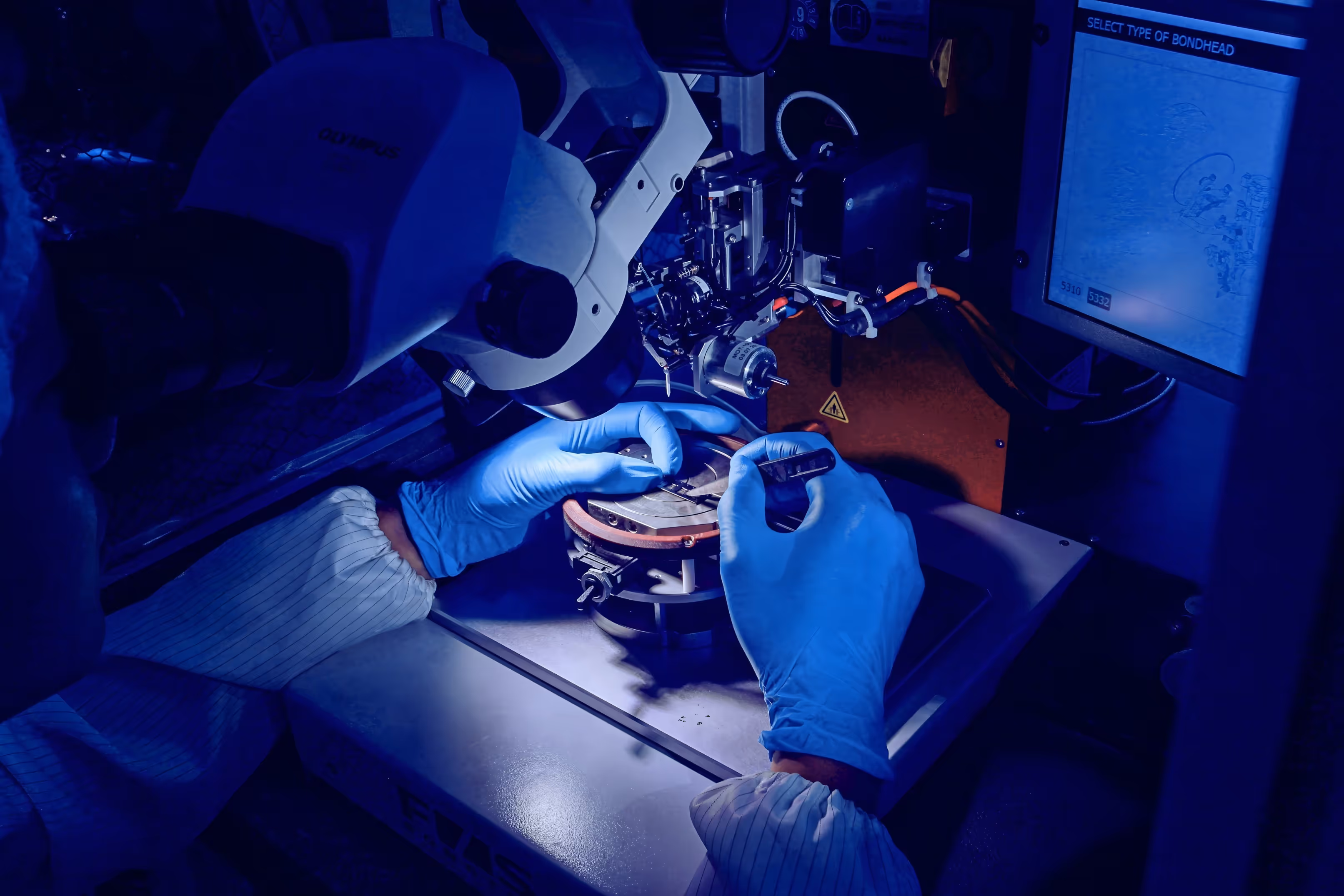
GPU infrastructure for drug discovery, genomics, medical imaging, and clinical AI. Built for the compute density, data control, and regulatory requirements that healthcare and life sciences organizations operate under.
Healthcare and life sciences teams are applying GPU compute to problems that used to be too slow or too costly to attempt. Molecular simulations that ran for weeks now finish in hours. Genomic pipelines that bottlenecked on CPU clusters now scale linearly on GPUs. Imaging models that depended on third-party clouds now run on dedicated infrastructure with full data control.

Accelerate virtual screening, molecular dynamics, and binding affinity prediction. GPU compute lets pharmaceutical and biotech teams explore far larger compound libraries and run physics-based simulations at a scale that reshapes early-stage discovery timelines.
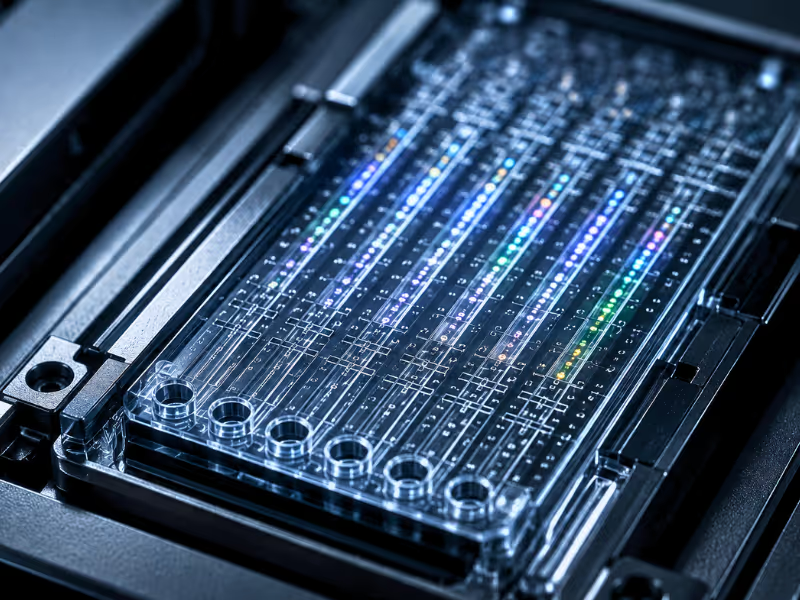
Process whole-genome sequencing, variant calling, and large-scale genomic datasets on GPU-accelerated pipelines. Workloads that took days on CPU clusters complete in hours, which changes the turnaround on both research programs and clinical reporting.

Train and deploy deep learning models for radiology, pathology, and diagnostic imaging. Infrastructure handles compute-heavy training and the low-latency inference clinical deployment requires, with data residency and privacy controls built in from the start.

Build and run models for clinical documentation, EHR analysis, patient risk stratification, and medical literature processing. Dedicated infrastructure means you train on sensitive clinical data without routing it through a third-party cloud.

Run structure prediction, protein folding, and large-scale bioinformatics workflows. These workloads are inherently GPU-parallel and take direct advantage of the memory bandwidth and compute density of modern accelerators.
Research institutions, hospitals, biotechs, and pharmaceutical companies all have different procurement processes, grant cycles, and data governance requirements that shape whether a capital expenditure or operating expenditure model makes more sense. Arc Compute supports both and helps you figure out which one fits.
Purchase GPU systems outright and deploy them in your own facility, a university data center, or a colocation environment. You own the hardware, control the physical and logical security environment, and benefit from lower long-term compute costs as the systems are utilized over their full lifecycle.
Research institutions, hospitals, and pharmaceutical companies with sustained compute needs, procurement processes that favor capital purchases, or data residency requirements that demand full ownership.
Access GPU infrastructure through managed services, leasing, or consumption-based models. You get high-performance compute without a large upfront commitment, with the flexibility to scale capacity up or down as projects, grants, and research programs evolve.
Biotech startups, grant-funded research groups, and clinical AI teams with project-based compute needs, variable workloads, or budget structures that favor operating expenses over capital outlays.
Many organizations run a mix. A research lab might own its core training systems while reaching for on-demand capacity around paper deadlines. A pharmaceutical team might own infrastructure for long-running discovery pipelines while leasing for clinical trial analysis. Arc Compute helps you design the right combination.

Dedicated GPU infrastructure with the flexibility of cloud, giving you full control over performance, cost, and data. Built for teams that need cloud-like agility with the data control and compliance posture healthcare requires.

Fully integrated GPU clusters for rapid deployment and scalable performance. Built for research groups and pharmaceutical teams standing up dedicated compute environments for drug discovery, genomics, or clinical AI.

Individual GPU servers tailored to your workloads, from single research systems to large-scale infrastructure builds. The right option when specific scientific or clinical workflows need specific hardware configurations.