Every major NVIDIA architecture transition forces a decision point for enterprise AI teams. The shift from Hopper to Blackwell was disruptive enough. What comes next is going to be harder.
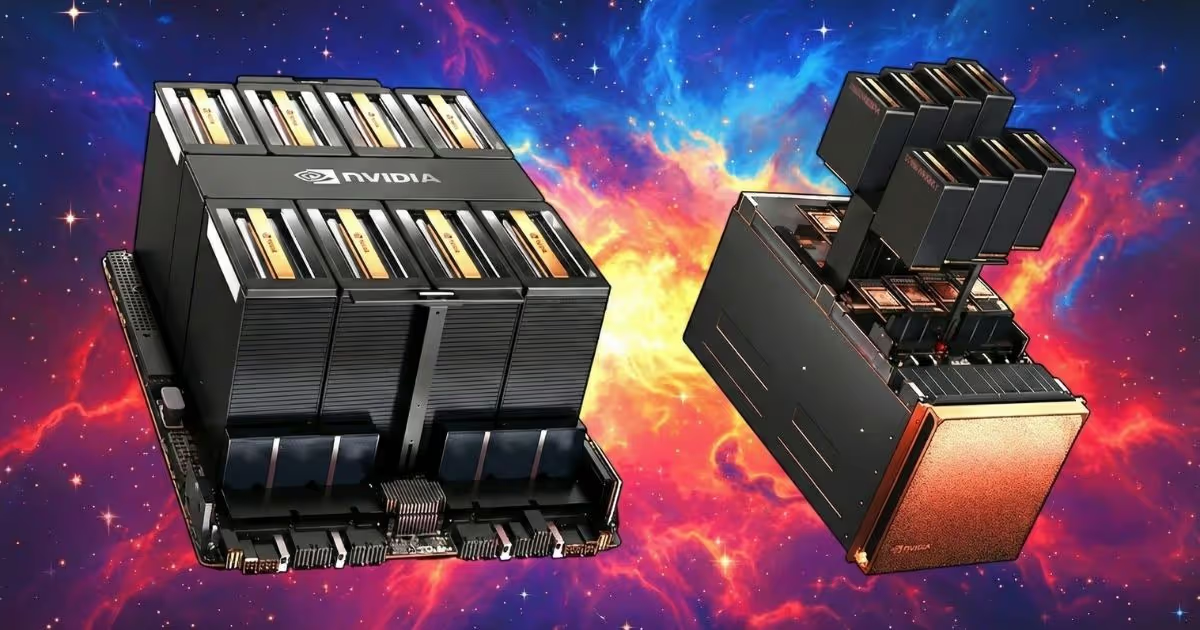
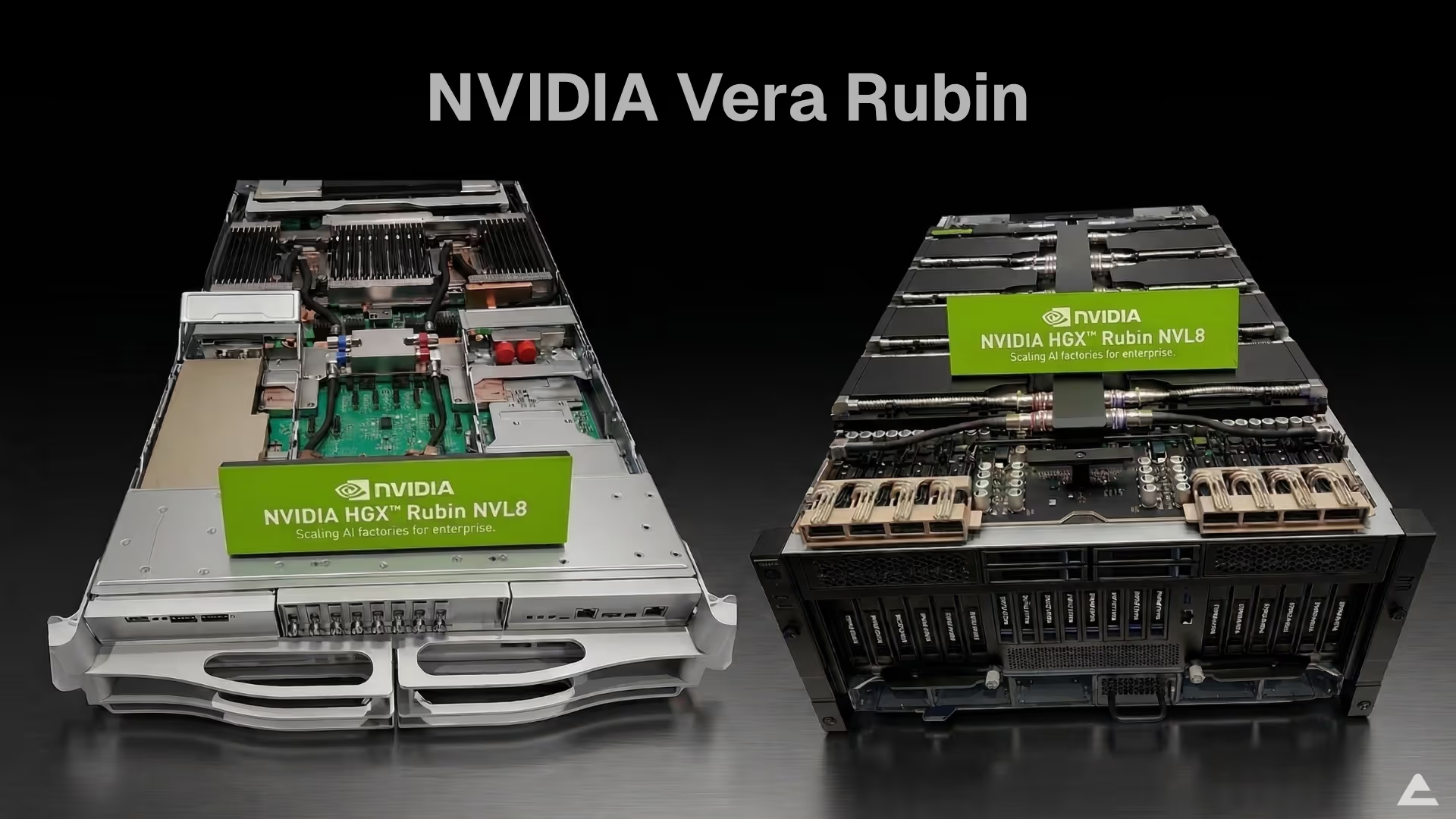
NVIDIA's Vera Rubin platform is no longer a roadmap item. At GTC 2026, Jensen Huang confirmed that the first Vera Rubin rack is already up and running at Microsoft Azure, with full production shipments targeting the second half of 2026. This is a full platform redesign: new GPU architecture, a custom ARM-based CPU (Vera), HBM4 memory, NVLink 6 interconnects, and a new Groq inference accelerator tightly integrated into the system.
For data center operators, ML infrastructure leads, and CTOs planning 12 to 18 months out, the question is no longer whether Rubin is coming. It is whether your facility, your procurement pipeline, and your thermal envelope can handle it.
And sitting underneath all of it is a supply constraint that most teams have not fully accounted for the HBM memory crunch.

What We Know About Vera Rubin
NVIDIA has progressively disclosed the Rubin roadmap across GTC conferences and public briefings from 2024 through 2026. At GTC 2026, Huang laid out concrete specs and confirmed production timelines. Here is what we know:
Vera Rubin NVLink 72: 3.6 exaflops of compute and 260 TB/s of all-to-all NVLink bandwidth. This is the core AI training and inference system, designed as a complete rack-scale computer with 72 GPUs connected via NVLink 6.
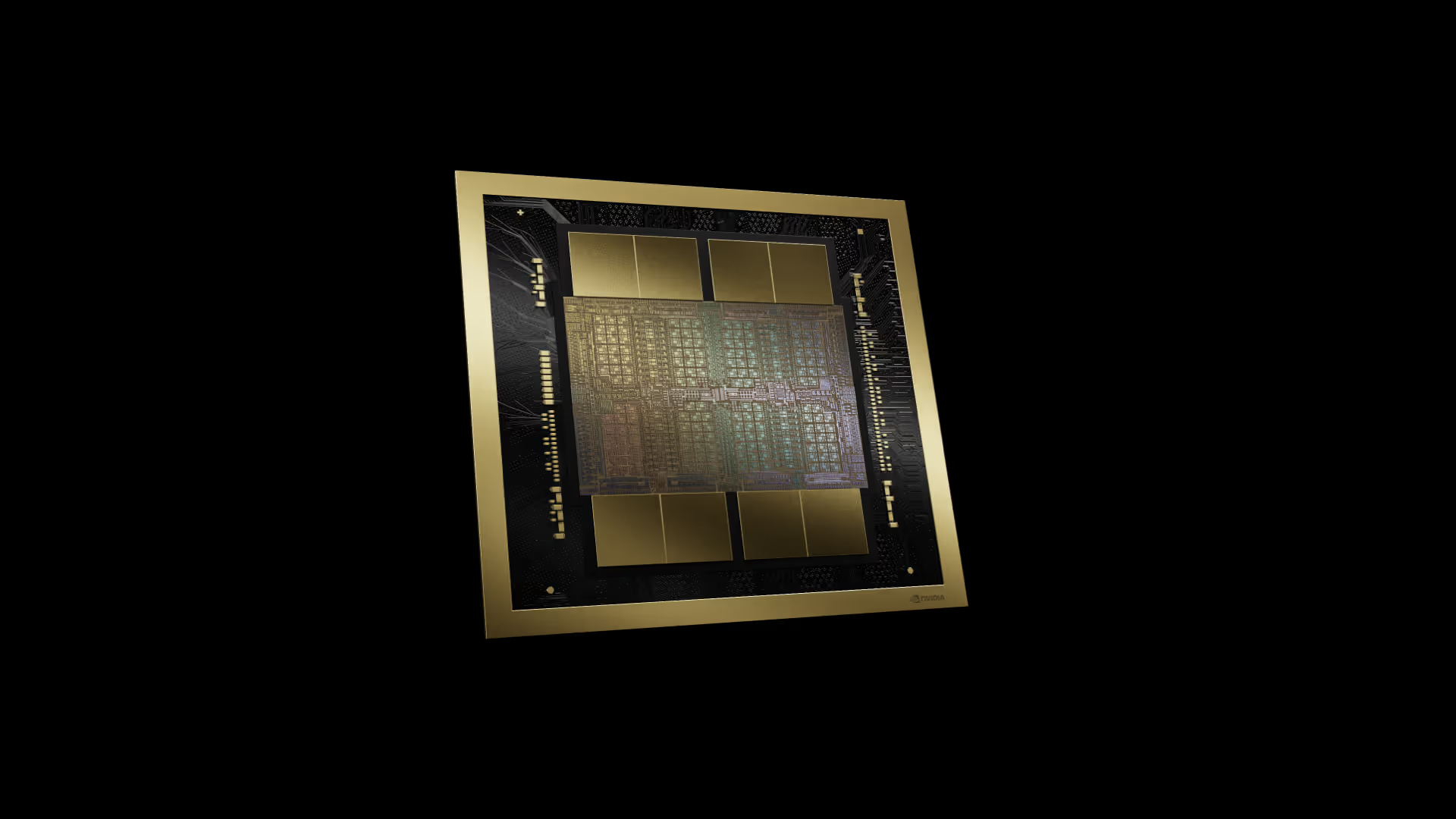
Rubin GPU (R100): The next-generation data center GPU succeeding the B200/B300 Blackwell series. Uses HBM4 memory for a generational jump in memory bandwidth and AI throughput.
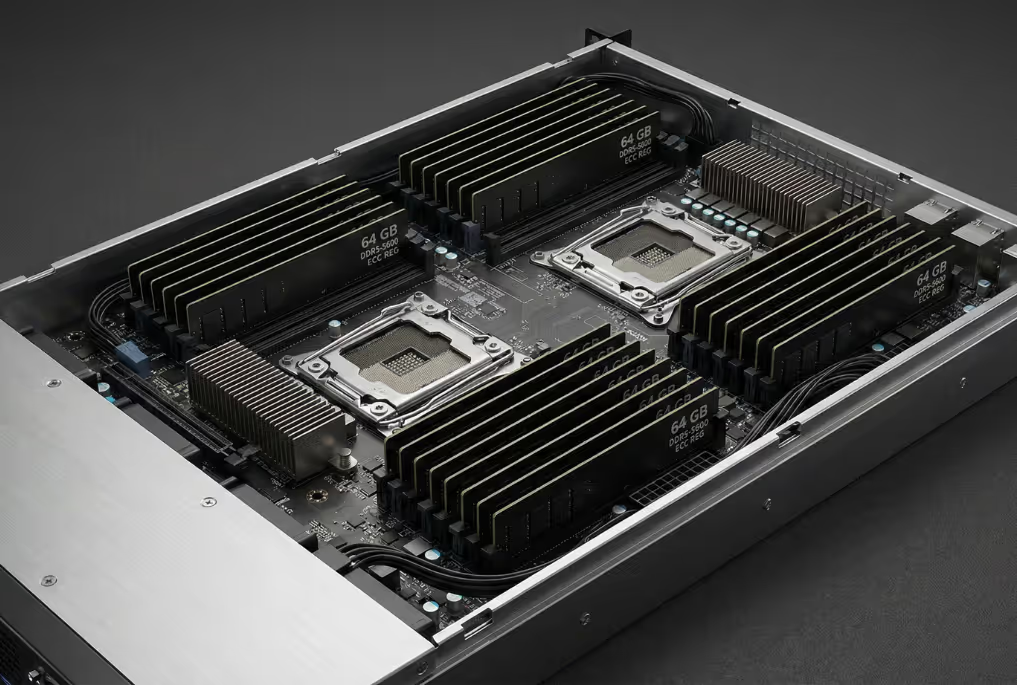
Vera CPU: NVIDIA's custom ARM-based CPU designed for orchestration and agentic workloads. Uses LPDDR5 for extreme energy efficiency. Already shipping standalone and confirmed as a multi-billion dollar business line for NVIDIA.
NVLink 6: Sixth-generation scale-up interconnect. Doubles bandwidth over NVLink 5. Fully liquid-cooled. NVLink Fusion extends connectivity to third-party CPUs and DPUs.
Groq LP 30 integration: A deterministic dataflow inference accelerator with massive on-chip SRAM, tightly coupled to Vera Rubin via Dynamo software. Together, they deliver 35x more throughput per megawatt compared to Blackwell. Samsung manufactures the Groq LP 30 chip, already in production.
Rubin Ultra: A higher-end variant using the new Kyber rack design, which connects 144 GPUs in a single NVLink domain. The chip is currently taping out, with availability expected to follow the initial Vera Rubin production run.
Huang also disclosed that NVIDIA now sees at least $1 trillion in committed demand through 2027, up from $500 billion at GTC 2025. The inference inflection point, as he framed it, is driving this: AI workloads have shifted from primarily training to production inference at scale, and the compute demand per token has grown roughly 10,000x in the past two years.
Blackwell vs. Vera Rubin: What Changes
The HBM Crunch: Why Memory Is the Real Bottleneck
Most enterprise teams worry about GPU cost or power draw when planning for next-gen systems. Those are real concerns. But the constraint that will hit hardest, and that most teams are not planning for, is HBM supply.
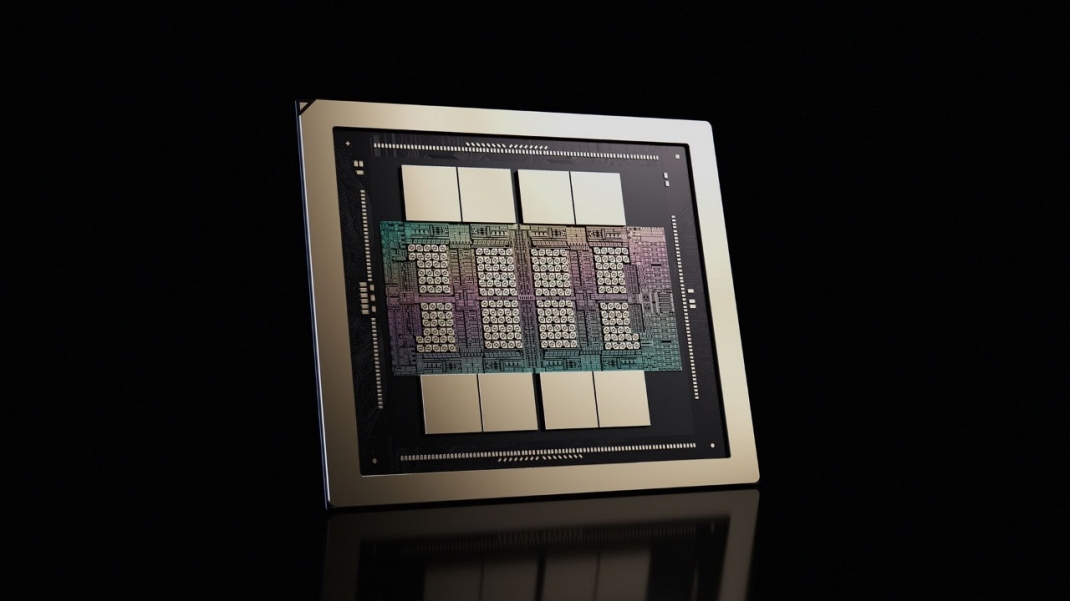
HBM4 is architecturally different from previous generations. Unlike HBM3e, where the memory supplier handled nearly all manufacturing, HBM4 uses a logic base die produced by the GPU vendor (NVIDIA or its fab partner), with DRAM stacks built on top by the memory maker. This joint-manufacturing model adds complexity to an already constrained supply chain.
Here is why the supply picture looks tight:
1. Production ramp takes time. SK Hynix, the leading HBM supplier, has targeted HBM4 mass production for the second half of 2025, with volume shipments aligning to NVIDIA's Rubin timeline. But "mass production" and "enough to meet global demand" are two different things. HBM3e was constrained well into 2025 despite shipping since late 2023.
2. Yield challenges are real. HBM4 stacks are taller and denser than HBM3e, with 12 to 16 high-interface layers. More layers mean more bonding steps and more chances for defects. Early yields on new HBM generations have historically been low, directly capping usable output.
3. Demand is not slowing. At GTC 2026, Huang stated NVIDIA sees at least $1 trillion in infrastructure demand through 2027. Every major cloud provider, every hyperscaler, and every sovereign AI initiative is competing for the same limited pool of HBM. TrendForce projected the HBM market would grow over 100% year-over-year in 2025, and 2026 demand stacks on top of that already inflated base.
4. Lead times lock in allocations early. NVIDIA allocates GPU systems based on committed purchase volumes, often 6 to 12 months before delivery. Organizations not already in the procurement pipeline for Vera Rubin systems could be looking at 2027 delivery dates.
HBM Evolution: Generational Comparison
What Data Center Teams Need to Plan for Now
Vera Rubin is already sampling. Production racks are shipping in the second half of 2026. Your planning window is not opening; it is closing. Here is what needs to be on the roadmap.
Power and Cooling
Blackwell pushed per-rack power density past 40 kW, with some DGX configurations reaching higher. Vera Rubin systems are 100% liquid-cooled, designed for 45-degree hot water cooling. This is not optional. The entire cable management and installation process has been redesigned around liquid cooling, with NVIDIA claiming rack installation time has dropped from two days to two hours.
For most enterprise data centers built in the last decade, air-cooled infrastructure will not be sufficient. Direct-to-chip liquid cooling becomes a baseline requirement. Facilities teams should be evaluating cooling retrofit options now, because the lead time on cooling infrastructure can be 6 months or more.
Rack and Floor Space
Higher compute density means fewer racks to deliver the same total compute, but each rack demands more power delivery, more cooling capacity, and more robust structural support. The new Kyber rack design for Rubin Ultra introduces vertical compute node insertion with a midplane architecture, replacing traditional cabling with integrated backplane connections. These are different physical form factors than what most enterprise data centers run today.
Network Fabric
NVLink 6 and the Spectrum X ecosystem will push data centers toward 800G Ethernet with co-packaged optics. NVIDIA confirmed at GTC 2026 that it is the only company currently in production with CPO (co-packaged optics) switch technology, manufactured with TSMC. Most enterprise networks today run 100G or 400G. Upgrading switch infrastructure, cabling, and optics is a multi-quarter project.
Procurement Strategy
This is where the HBM supply constraint turns from a market trend into a direct business problem. GPU systems equipped with HBM4 will have constrained availability for the first 12 to 18 months after launch. NVIDIA has built a supply chain capable of manufacturing thousands of racks per week, but demand visibility already sits at $1 trillion through 2027. Organizations that take a wait-and-see approach will find themselves at the back of the allocation queue.
Smart procurement means engaging with GPU infrastructure partners early, locking in allocation commitments ahead of production, and planning for phased deployments rather than trying to place one large order after systems become generally available.
The Ownership vs. Cloud Decision Gets Sharper
Every GPU architecture transition restarts the debate: should we own our compute infrastructure or rent it from a cloud provider?
With Vera Rubin, the economics tilt further toward ownership for organizations running sustained AI workloads. At GTC 2026, Huang framed this explicitly around what he called "token factory economics": every data center is now an AI factory, and its output is measured in tokens per watt. Power is the fixed constraint. The infrastructure you put inside that power envelope determines your revenue potential.
Cloud GPU pricing will spike at launch. Cloud providers face the same HBM supply constraints as everyone else. When Vera Rubin instances appear on AWS, Azure, or GCP, pricing will reflect scarcity for the first 12 to 18 months.
Sustained workloads favor CapEx. If your team is running inference around the clock or training on multi-week cycles, the total cost of ownership on purpose-built hardware breaks even with equivalent cloud spend in roughly 12 to 18 months. Beyond that, savings compound. This has been consistently true since Hopper, and the economics widen with each new generation.
Data residency requirements keep expanding. GDPR, HIPAA, PCI-DSS, the EU AI Act, and similar frameworks across the Middle East and Asia-Pacific continue tightening rules around data processing location. For finance, healthcare, and government workloads, on-premises GPU infrastructure is increasingly the default compliance path.
Cloud still makes sense for burst capacity, early experimentation, and disaster recovery. But for production AI at sustained scale, the trend toward infrastructure ownership is hard to ignore.
Planning GPU Infrastructure for the Next Cycle
The Blackwell-to-Rubin transition is going to separate organizations that planned ahead from those that reacted. Planning does not just mean setting a budget line for new GPUs. It means aligning your facility capacity, network readiness, cooling infrastructure, and procurement timeline to a delivery window that is tightening by the quarter.
This is the kind of infrastructure transition that benefits from working with a partner who operates at the hardware system level. Arc Compute specializes in purpose-built, on-premises GPU systems for AI workloads, working with enterprise teams to align hardware procurement, facility readiness, and deployment timelines so that when systems ship, they go into production in weeks rather than months.
A Practical Timeline for Enterprise Teams
The Bottom Line
Vera Rubin is not another GPU refresh. It is a platform shift that touches memory technology, interconnect architecture, CPU design, cooling requirements, and power delivery all at once. The HBM4 supply crunch adds a procurement and timing dimension that pure performance planning does not account for. The preparation window is open. It will not stay open long.