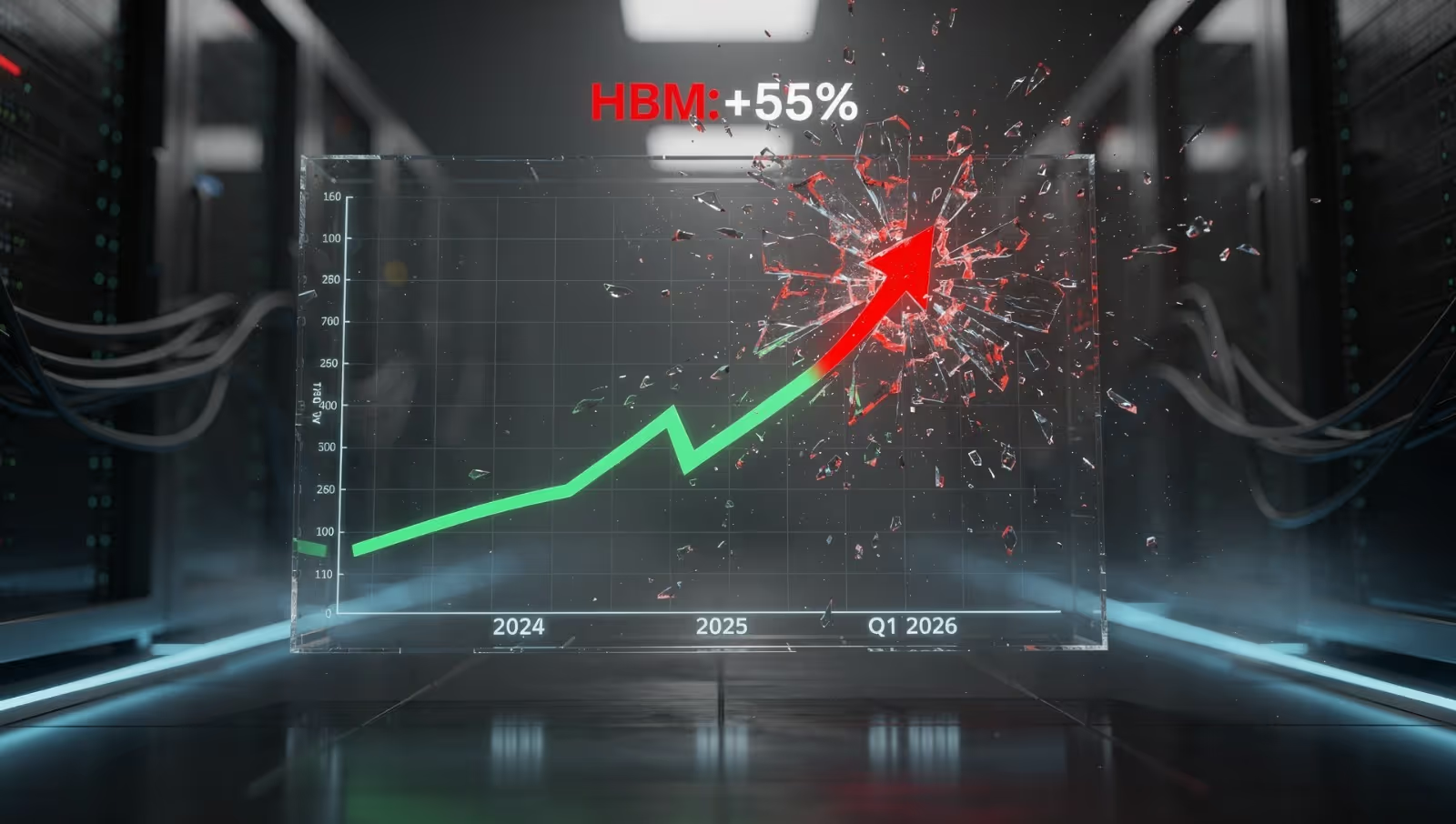
AI teams are running into a problem the market isn’t built to solve: server memory prices are up more than 300 percent this year thanks to supply shortages and high demand for AI servers, yet DRAM suppliers are holding production flat and shifting capacity to higher-margin AI components. That imbalance has pushed server memory prices up 20 to 40 percent quarter-over-quarter, turning system RAM into the second most painful line item in every H100, H200, and Blackwell server.
In that chaos, many vendors are defaulting to oversized 3 TB configurations built on the most supply-constrained DIMMs, quietly adding tens of thousands of dollars per node. The catch is simple: most workloads will never use that capacity.
The shortage is real, but the cost trap is optional.
AI’s Next Bottleneck Isn’t Compute, It’s Memory
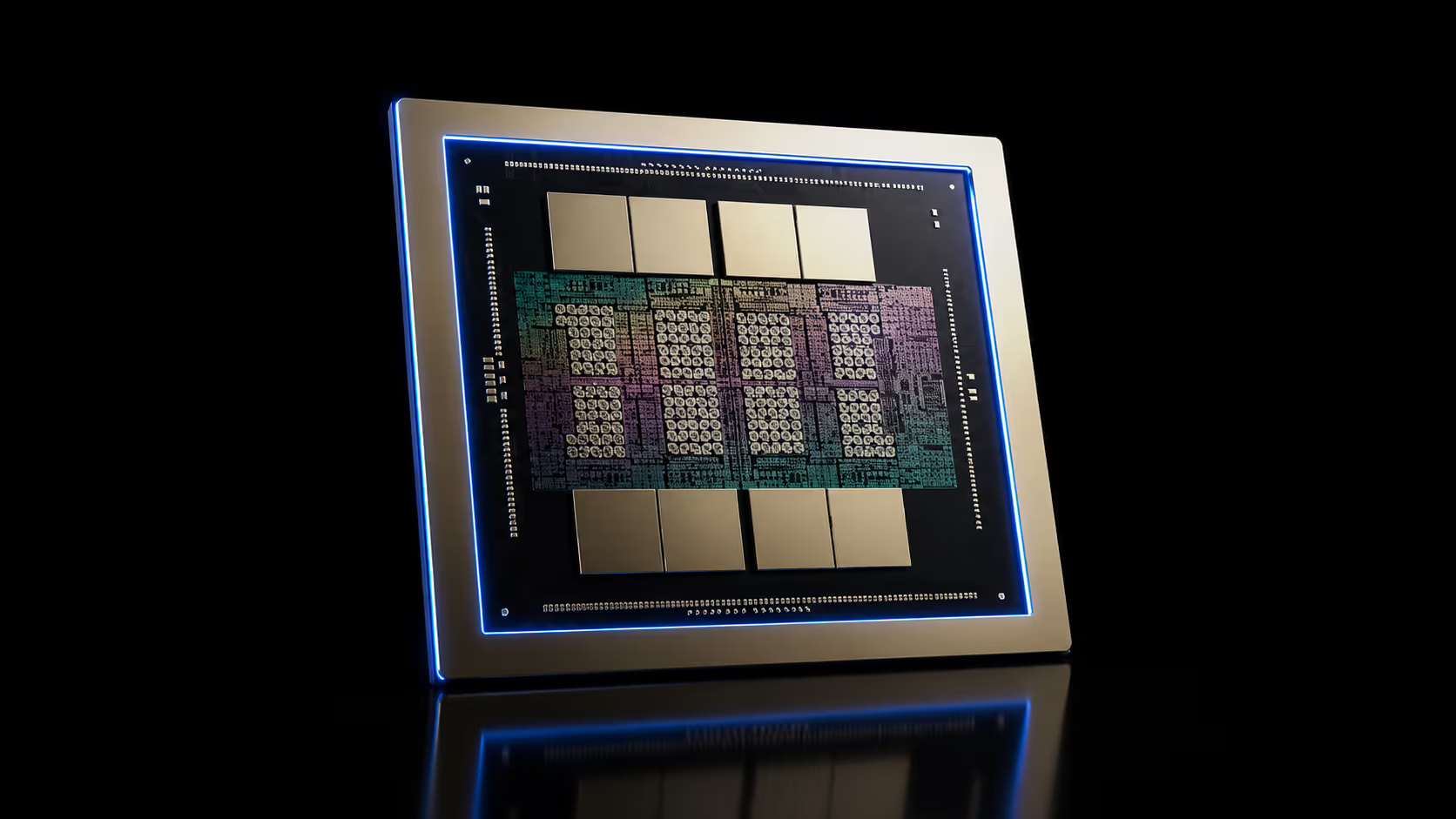
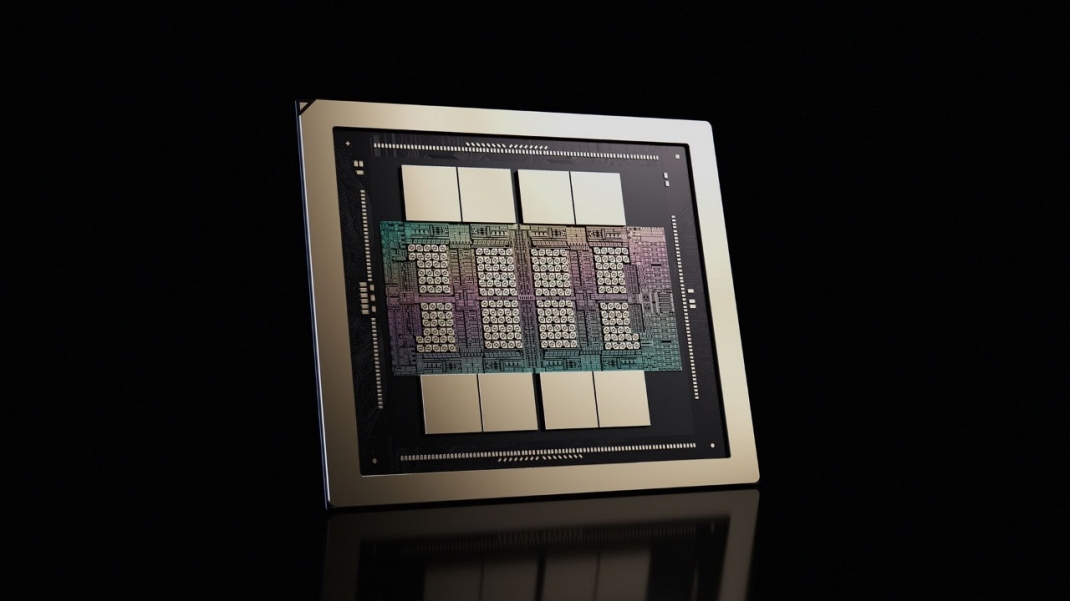
Every GPU server is built on two memory domains: high-bandwidth HBM memory attached to the GPU and system DRAM connected to the CPU. The HBM pipeline is tight, but it is predictable and largely shielded behind NVIDIA and AMD’s procurement scale.
System memory is where cracks are forming.
Server DRAM and enterprise SSDs are experiencing the sharpest supply constraints in years. Manufacturers are allocating output toward the AI sector but not expanding actual production capacity. As demand continues to surge, that decision creates a cascading effect across the entire ecosystem: higher prices, longer lead times, and lower availability of common configurations.
For enterprises building H100, H200, or Blackwell clusters, this is no longer a procurement inconvenience. It is the constraint shaping architecture, timelines, and total cost of ownership.
What Modern GPU Servers Actually Need
Most high-performance AI servers follow one of two CPU architectures:
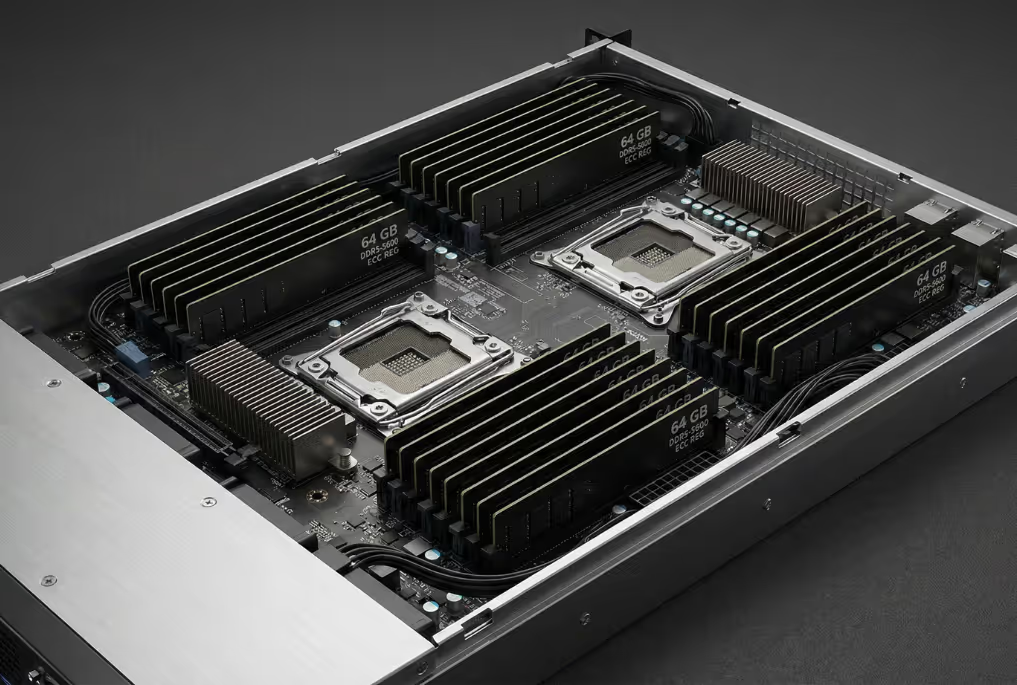
- Intel-based systems with 32 DIMM slots
- AMD-based systems with 24 DIMM slots
Across real production deployments, roughly 80% of Arc Compute customers choose Intel-based systems, which means 32 DIMMs is the practical standard.
Before the shortage cycle, almost every enterprise deployment stabilized around:
- 64 GB DIMMs
- All slots populated
- 2.0 TB of system memory
For three to four years, across LLM training, fine-tuning, RAG pipelines, multi-modal applications, and computer vision workloads, 1.5 to 2.0 TB has consistently been the real-world requirement.
Then the supply chain shifted, and the ecosystem began pushing far larger footprints.
The 3 TB Trap: Overspec’ing in a Shortage Market
Many vendors have quietly normalized 3 TB system memory as the new standard for Blackwell-era servers. To hit that capacity, they rely on:
- 96 GB DIMMs
- 128 GB DIMMs
- Or even higher-capacity modules introduced specifically for AI demand
These DIMMs live in the most supply-constrained tier of the market. And that is exactly why vendors push them.
A single GPU server configured with 96 GB DIMMs can cost 30,000 to 40,000 dollars more than the same system built on 64 GB modules. In extreme cases, 128 or 256 GB DIMMs can push system cost up by 100,000 dollars or more per node.
This is one of the largest silent budget leaks inside modern AI infrastructure. And in 95 percent of real workloads, the extra memory sits idle.
Overspec’ing does not solve a technical problem. It amplifies a supply-chain one.
Why Most Workloads Don’t Need 3 TB or More
Host-side DRAM is used for:
- Data ingestion
- Preprocessing pipelines
- Framework overhead (PyTorch, TensorFlow, JAX)
- Caches, routing layers, and service meshes
- Multi-tenant orchestration
None of the heavy tensor math lives here. Weights, activations, and model state live in one place: HBM on the GPU.
You genuinely need more than 2 TB only if you are:
- Running extreme MoE architectures
- Managing massive in-memory feature stores on each node
- Packing multiple heterogeneous services into a single physical server by choice
If that is your situation, you already know. For everyone else, 2 TB is not a compromise. It is smart engineering.
Why the Shortage Persists
DRAM fabs could expand output, but they are not. Increasing production means billions in CapEx and years of lead time. Instead, top suppliers have stated publicly that they are investing in higher-margin AI memory products rather than expanding general DRAM capacity.
Meanwhile:
- AI GPU shipments continue to climb
- Hyperscalers absorb the majority of available inventory
- Enterprise buyers compete in a constrained procurement lane
This is why system memory volatility is now tightly linked to AI expansion. The supply chain was not built for this growth curve, and it will not stabilize overnight.
How to Stay Ahead of the Memory Crisis
1. Specify DIMM size in writing
Never leave memory configuration to vendor defaults. Require 64 GB DIMMs unless your workload demands otherwise.
2. Standardize on 2 TB for H100, H200, B200, and B300
Treat this as the baseline for 8-GPU servers. If your host-side memory pressure is low today, it will stay low unless your architecture changes materially.
3. Request itemized memory tier pricing
Make vendors show the cost impact of 2 TB vs. 3 TB vs. 4 TB. Transparency shifts leverage to your side.
4. Benchmark with your real workloads
Validate performance on 2 TB. If there is no measurable gain at 3 TB, do not buy it.
5. Capitalize on lower lead times
Right-sized configurations do not just cost less. They ship faster, because they avoid the constrained DIMM tiers. This is how you protect your budget and accelerate your deployment schedule in a supply chain that rewards discipline.
Arc Compute’s Perspective
We sit at the intersection of AI demand and hardware supply every day. We have watched pricing swing by tens of thousands of dollars per server due purely to system memory choices. We have seen organizations inadvertently inflate cluster cost by seven figures because a vendor positioned 3 TB as future-proofing.
Our recommendation is consistent:
- 2 TB is the strategic default
- 64 GB DIMMs are the optimal building block
- 3 TB or more should be reserved for workloads that can empirically justify it
- Overspec’ing system memory during a global shortage is the fastest way to waste budget
AI infrastructure is expensive enough. Memory inflation does not need to make it worse.
If your next GPU deployment includes H100, H200, or Blackwell systems, contact us and we can help you validate the right configuration, avoid overspec’ing traps, and stabilize your cost curve before hardware scarcity does it for you.