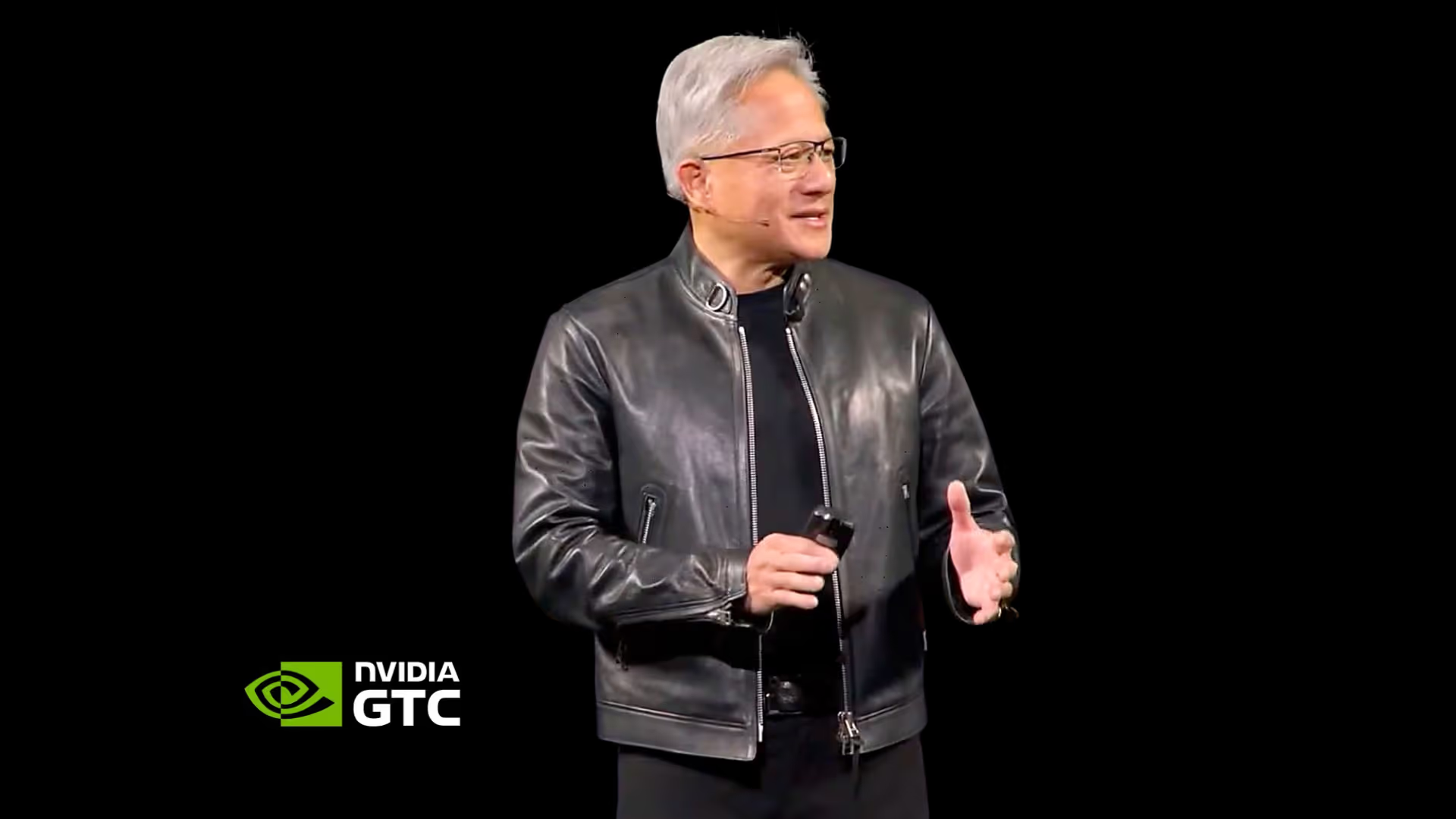
There's a moment in Jensen Huang's GTC keynote where he pauses to tell the crowd that where he stands right now, looking out through 2027, he sees at least $1 trillion in AI infrastructure demand. Not $500 billion (the number he announced one year ago). Double that, and he thinks even that will fall short. Nobody in the SAP Center looked surprised. That's actually the interesting part.
The audience (15,000+ developers, engineers, and founders) has spent the past year building on NVIDIA's infrastructure. They've watched inference costs drop, agent capabilities explode, and compute demand go vertical. Jensen wasn't predicting the future to a skeptical crowd. He was confirming what the people in those seats already suspected.
Here's what he actually said, and why it matters for everyone running serious AI workloads.
The Inference Inflection Point Is Real, and It's Already Here
Jensen spent real time explaining why demand has multiplied so dramatically. His argument comes down to three back-to-back breakthroughs: ChatGPT unlocked generative AI, OpenAI's o1 made that AI trustworthy through reasoning, and then Claude Code arrived as the first truly agentic model, one that reads files, compiles code, tests it, evaluates results, and iterates without hand-holding.
Each step compounded the compute requirement. Reasoning models use far more input tokens for context and more output tokens for thinking. Agentic models run in continuous loops. The result, by Jensen's math: compute demand for AI work has gone up roughly 10,000 times per task, while usage volume has gone up around 100 times. He's saying compute demand has effectively multiplied by a million in two years.
You can debate the precision of that number. You can't really debate the direction.
At Arc Compute, we see this demand firsthand. Customers who were running exploratory workloads 18 months ago are now running production inference at scales they didn't plan for. The infrastructure decisions you make today have a very short lead time before they hit revenue.
Vera Rubin: 35x More, and Jensen Thinks You're Still Thinking Too Small
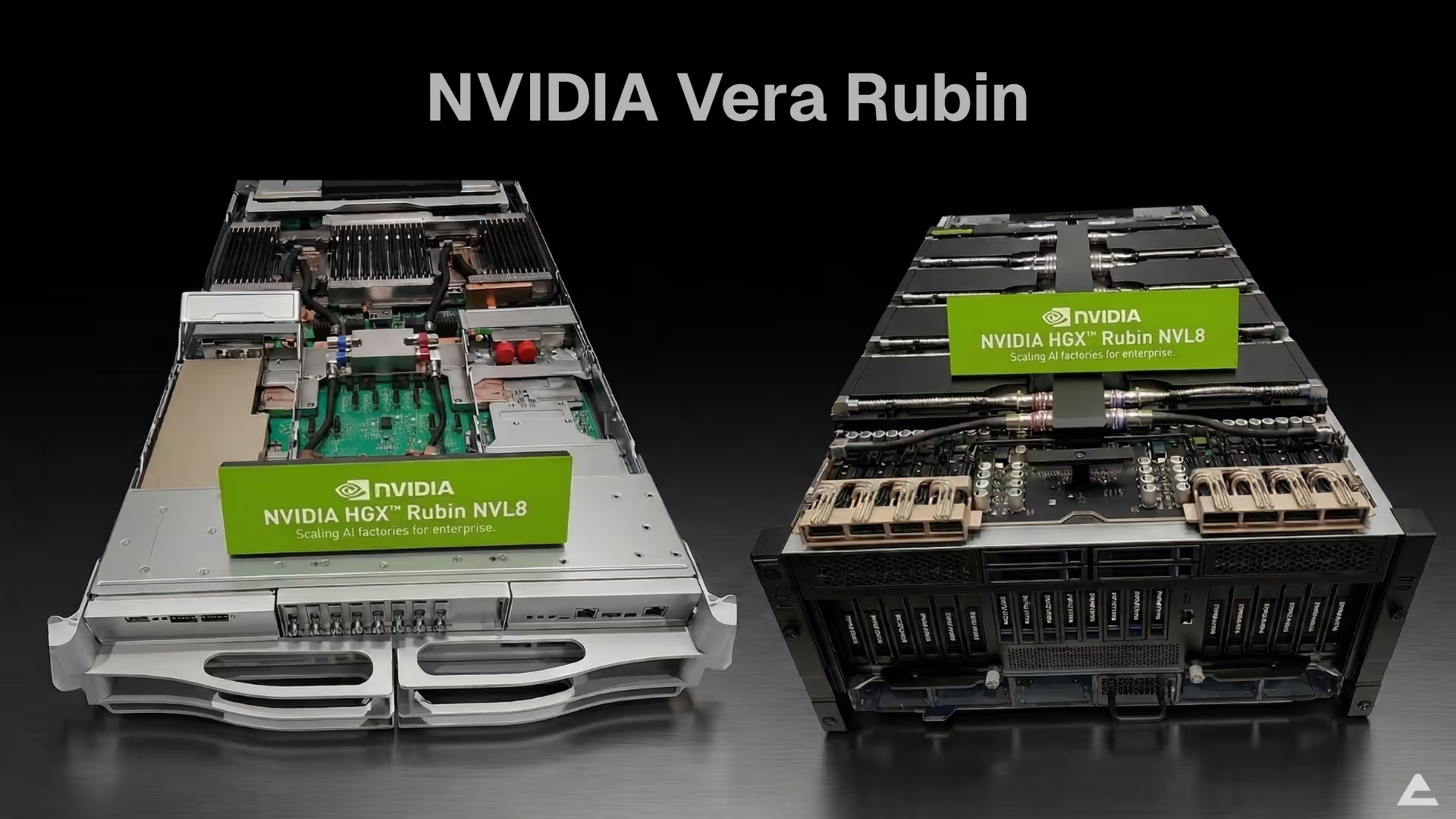
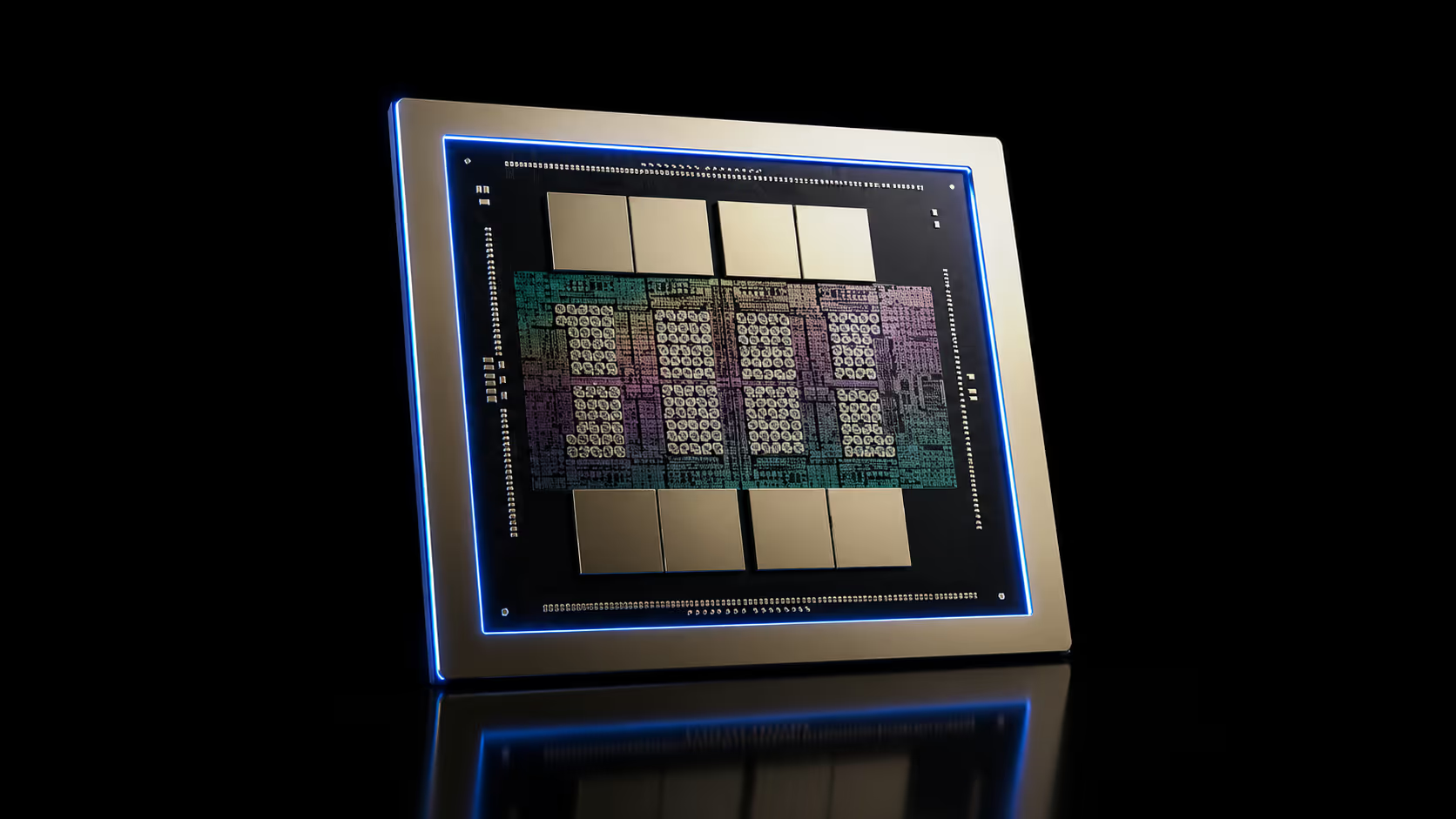
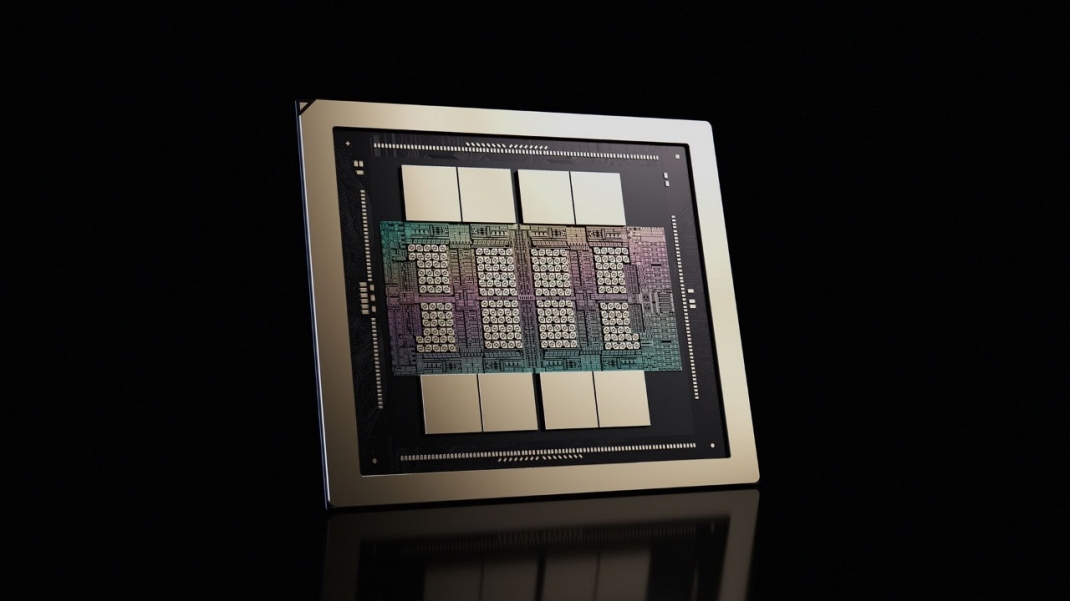
The flagship announcement was Vera Rubin, a complete re-architecture of NVIDIA's compute platform built specifically for the agentic AI era. The headline numbers are 3.6 exaflops of compute and 260TB/second of all-to-all NVLink bandwidth in a single NVLink 72 domain.
But Jensen's more interesting point wasn't the raw specs. It was the factory economics argument.
He introduced what he calls the Token Factory framework: every data center has a fixed power budget, and every watt you don't convert to tokens is revenue you left on the table. He walked through a simple four-tier model (free, medium, high, premium) at different token speeds and prices ($3/million up to $150/million), and showed that moving from Blackwell to Vera Rubin at the same power envelope could generate roughly 5x the revenue. Not 5x the compute. 5x the revenue.
That's the reframe. Your GPU cluster is no longer a cost center. It's a token factory, and the output is your product.
The Groq Integration: When Two Extremes Work Better Together
One of the more technically interesting announcements was the Groq acquisition and integration into Vera Rubin. Jensen was direct about why: NVLink 72 is built for throughput and dominates that axis completely, but there's a regime at very high token speeds, long-form generation, and bandwidth-constrained decode where it runs out of steam.
Groq's architecture is the opposite extreme: massive on-chip SRAM, statically compiled, deterministic dataflow, built purely for fast inference. No dynamic scheduling, no memory bottlenecks. Jensen's solution is to disaggregate inference using Dynamo (NVIDIA's inference orchestration layer), run the prefill on Vera Rubin, and offload token generation decode to Groq chips.
The result, he said, is 35x more throughput at the high-speed premium tier compared to Blackwell.
His rough guidance on how to configure a data center: if most of your workload is high-throughput batch inference, use 100% Vera Rubin. If you're doing high-value, latency-sensitive coding or engineering work, consider adding Groq to roughly 25% of your cluster.
OpenClaw Is the New Linux. Jensen Isn't Being Hyperbolic
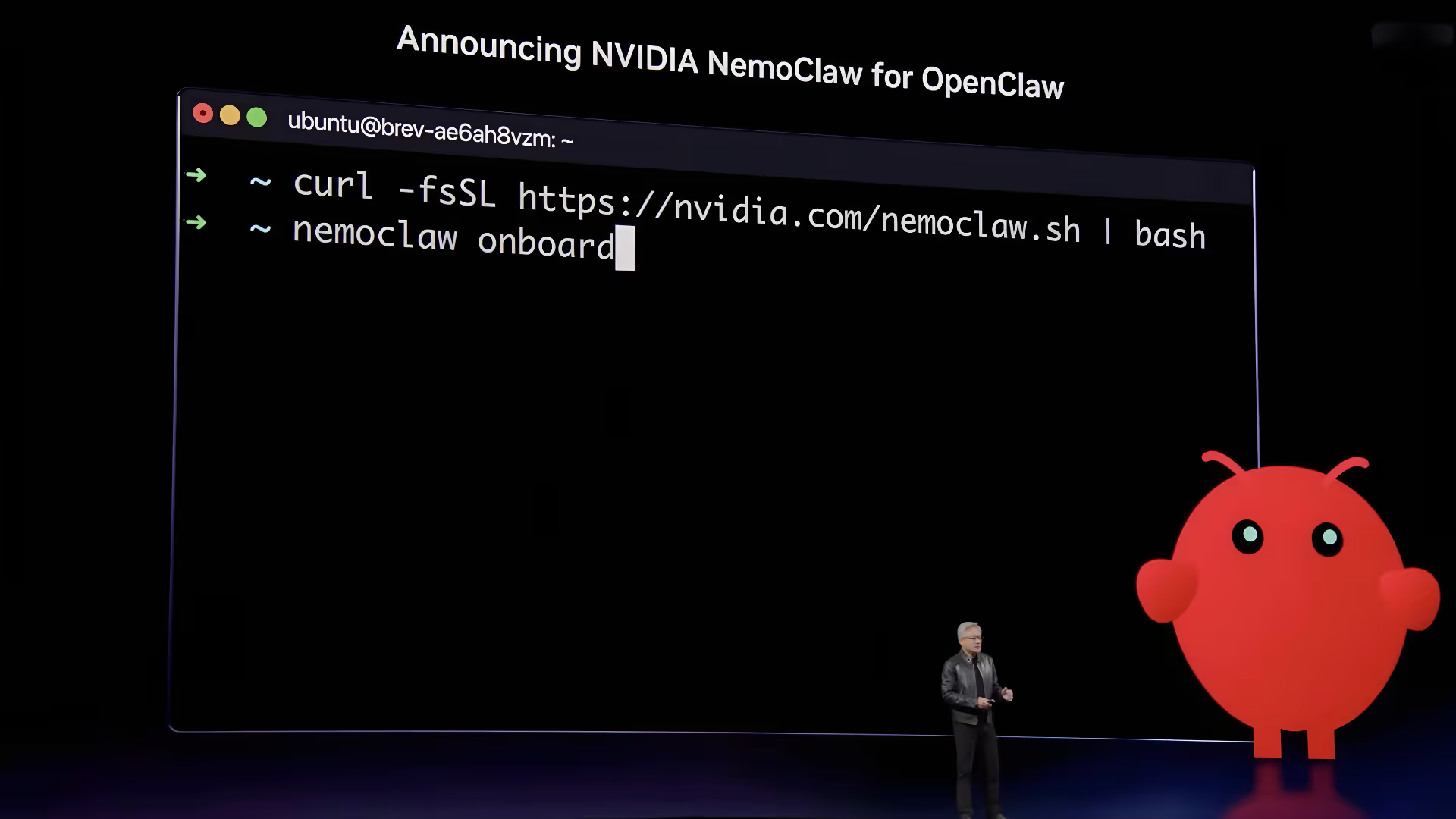
Jensen's claim that OpenClaw became the most popular open source project in human history within weeks of launch, surpassing Linux's 30-year accumulation, could read as hype. But his framing of why it matters holds up.
He walked through what OpenClaw actually is: resource management, tool access, filesystem access, LLM calls, scheduling, cron jobs, subagent spawning, multimodal I/O. That's an operating system. Not metaphorically. Functionally. And just as Windows made personal computers accessible and Kubernetes made mobile cloud infrastructure accessible, OpenClaw is making personal agents accessible.
Every enterprise IT department now needs an agentic AI strategy the same way they needed a Linux strategy in the 2000s and a Kubernetes strategy in the 2010s. Jensen was emphatic about this.
NVIDIA's contribution is NeMo Claw, an enterprise-hardened reference stack that adds a policy engine, network guardrail, and privacy router on top of OpenClaw, making it safe to run inside corporate networks where agents have access to sensitive data and can execute code. The security framing here isn't boilerplate. An agent that can read employee records, touch supply chain data, and communicate externally is a genuine security surface.
Physical AI: From Simulation to Street
The robotics section of the keynote was substantial. Jensen announced four new automotive partners for NVIDIA's robotaxi-ready platform: BYD, Hyundai, Nissan, and Geely, together representing 18 million vehicles per year. Added to existing partners like Toyota, Mercedes, and GM, the installed base of NVIDIA-powered autonomous-capable vehicles is getting hard to ignore.
He also walked through the Cosmos-to-Isaac pipeline: Cosmos world models generate synthetic data at scale, Isaac Lab handles robot training and evaluation, and Groot provides the general-purpose robot reasoning models. The argument is that generalization (one brain for a humanoid in a kitchen, a quadruped on a road, and a robotic arm cooking) requires pooling data across every robot type, not siloing it.
The Disney Olaf demo at the end was genuinely impressive (the robot adapted its movement in real-time using the Newton physics solver NVIDIA co-developed with Disney Research and DeepMind), but the more important point was the underlying infrastructure: Newton, Isaac Lab, and Cosmos are all open source.
What This Means for AI Infrastructure Buyers Right Now
Jensen's roadmap is annual cadence: Blackwell now, Vera Rubin next, then Feynman with a new GPU, LP40 Groq chip, and Rosa CPU. Backwards compatibility is maintained, so you're not forced to rip and replace.
A few things worth internalizing:
Inference is your revenue line. Jensen's token-per-watt framing isn't just a product pitch. It's how every CSP and enterprise AI team will evaluate infrastructure ROI going forward. The question isn't what's the peak FLOPS spec. It's what's the token yield at your power cap.
Disaggregated inference extends GPU useful life. Pairing decode-optimized Groq chips with older Hopper or Ampere clusters extracts more value from existing infrastructure. Jensen noted Ampere pricing in the cloud is going up, not down, because Cuda's massive application reach keeps old hardware useful.
The enterprise AI stack is consolidating around agents. Every SaaS company, Jensen said, will become a GaaS company (genetics as a service). The companies that build the agent harnesses, data pipelines, and token consumption infrastructure around OpenClaw are building the next layer of enterprise software.
At Arc Compute, our view is that the infrastructure layer is settling. The GPU architecture choices are clearer than they've been in years. What's less settled, and where we spend most of our time, is helping customers build the operational layer on top: inference optimization, cost per token management, and scaling agent workloads without the economics falling apart. That's where the real work is happening right now, and GTC 2026 confirmed we're early in it.
Arc Compute helps companies design, deploy, and optimize GPU infrastructure for production AI workloads. If you're navigating the Blackwell-to-Rubin transition or building out inference capacity, reach out.