A Practical Guide to Buying AI Infrastructure in 2026
Buying GPUs in 2026 is no longer about picking the fastest chip on a roadmap. It’s about understanding what you can actually buy, at what price, and on what timeline.
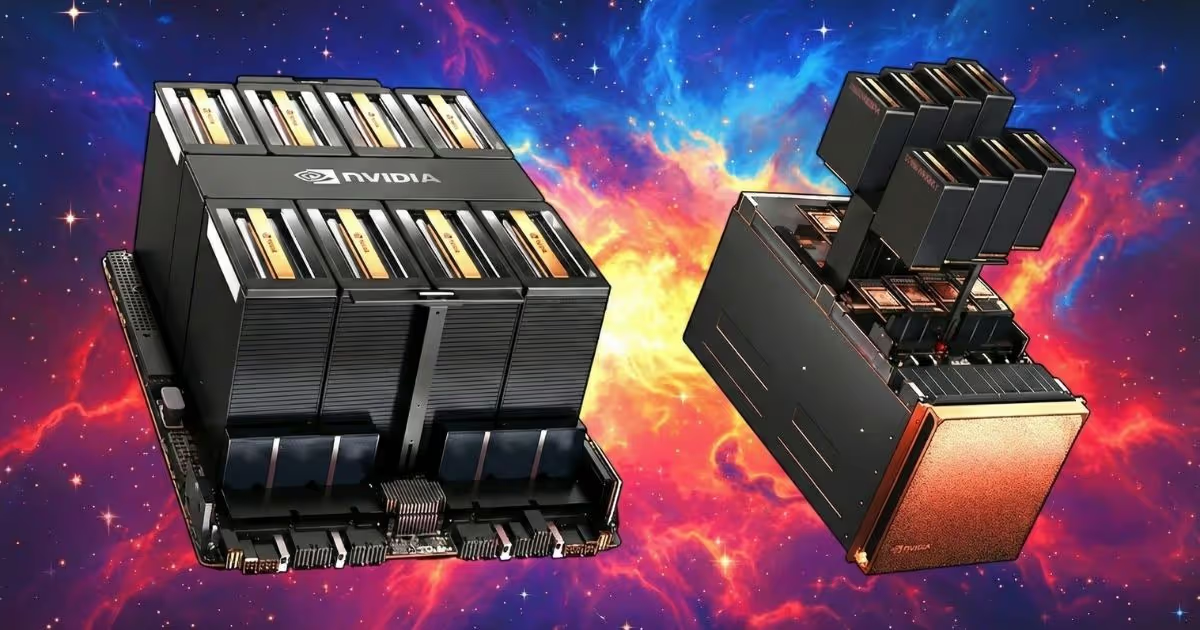
On paper, NVIDIA’s lineup looks straightforward: Hopper today, Blackwell now, Rubin next. In reality, supply constraints, memory shortages, and rapidly shifting allocations have collapsed the decision space. Some products are disappearing faster than expected. Others are becoming the default simply because they are the only viable option left.
At the same time, prices across every SXM-based system are rising, driven by sustained demand for high-bandwidth memory and limited supply. Waiting is no longer a neutral decision. Even short delays often mean higher quotes or lost allocation entirely.
This guide reframes the decision around reality, not theory.
The Reality of GPU Availability in Early 2026
Availability now matters as much as architecture.
GPU Availability Snapshot
Overlaying all of this is a persistent HBM memory shortage, which continues to push prices higher across every vendor and configuration. There is no signal that this pressure will ease in the near term.
Why GPU Decisions Feel Different Than They Used To
Historically, buyers could wait out a generation change and expect better pricing or more supply. That dynamic has broken.
Today, success is driven by three factors:
- Memory capacity and bandwidth
- Facility and power constraints
- Timing and allocation certainty
Modern AI workloads are overwhelmingly memory-bound. Compute improvements matter, but memory density determines whether infrastructure scales efficiently.
Where H200 Fits Today
H200 still plays an important role, but its position has shifted.
It is now best understood as the most affordable SXM-based GPU system still available, not an abundant or long-term option.
H200 Positioning Summary
H200 remains attractive for teams that need immediate capacity, especially in existing air-cooled data centers. However, new HGX and DGX H200 systems are becoming harder to secure as OEMs shift production toward Blackwell.
Why B300 Has Become the Default for GPU Buyers
For GPU buyers, the economics now favor B300.
While B300 has a higher per-GPU cost, it delivers significantly more memory and bandwidth, which changes system-level economics.
H200 vs B300 at the System Level
When evaluated holistically, B300 often requires fewer GPUs per workload, which reduces networking complexity, rack density, and operational overhead.
For most buyers planning new clusters in 2026, B300 is the best bang for your buck, not because it is the cheapest option, but because it balances availability, capability, and longevity better than any alternative.
The B200 Reality Check (Expanded)
Most comparison guides still list B200 as the “middle option.” In practice, that option has disappeared.
B200 Availability Status
Unless you already have a confirmed allocation, B200 should not be part of new infrastructure plans.
That said, used or secondary-market B200 systems may still exist. These can be viable for certain training workloads, but they carry tradeoffs including limited warranty coverage, uncertain support lifetimes, and higher operational risk.
B200’s disappearance is not about performance. It is about market velocity.
And What About Rubin?
Rubin represents a major architectural leap, but it is not a near-term solution.
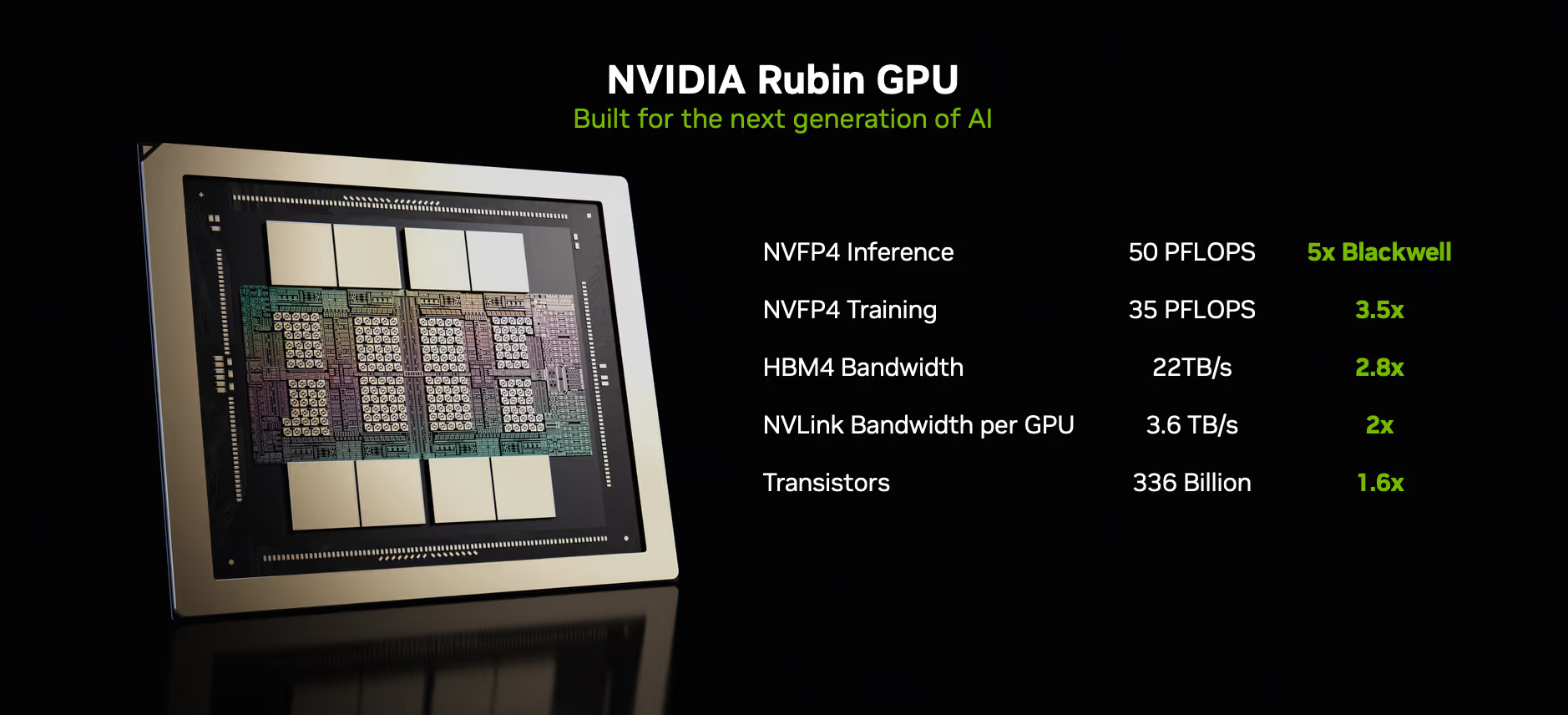
Rubin vs Blackwell at a Glance
Rubin introduces HBM4, dramatically higher bandwidth, and improved front-end efficiency to keep execution pipelines saturated under heavy transformer workloads. It is designed for next-generation AI factories.
However, Rubin does not solve today’s constraints. Broad availability will lag announcements, and early systems will likely command premium pricing.
The Memory Shortage and Why Waiting Is Risky
HBM demand continues to exceed supply across HBM3e and HBM4. Every major AI platform competes for the same constrained resource.
Market Impact of HBM Constraints
In this environment, delaying procurement rarely improves outcomes. More often, it results in higher cost for the same hardware.
Bottom Line
In 2026, the best GPU platform is defined by what you can buy and deploy, not what looks best on a roadmap.
- H200 is the most affordable SXM-based option, but availability is fading
- B300 is the most available and best-value platform for new HGX and DGX systems
- Rubin is the future, but not a solution for near-term needs
If you are ready to purchase GPU systems now, waiting is likely to cost you in price, availability, or both.
The best infrastructure decision today is the one you can execute.
Talk to an Architect
Not sure which configuration fits your workload? Arc Compute's infrastructure team can help you model memory requirements, evaluate facility constraints, and build a TCO projection for your specific deployment.